

Navi Pillay
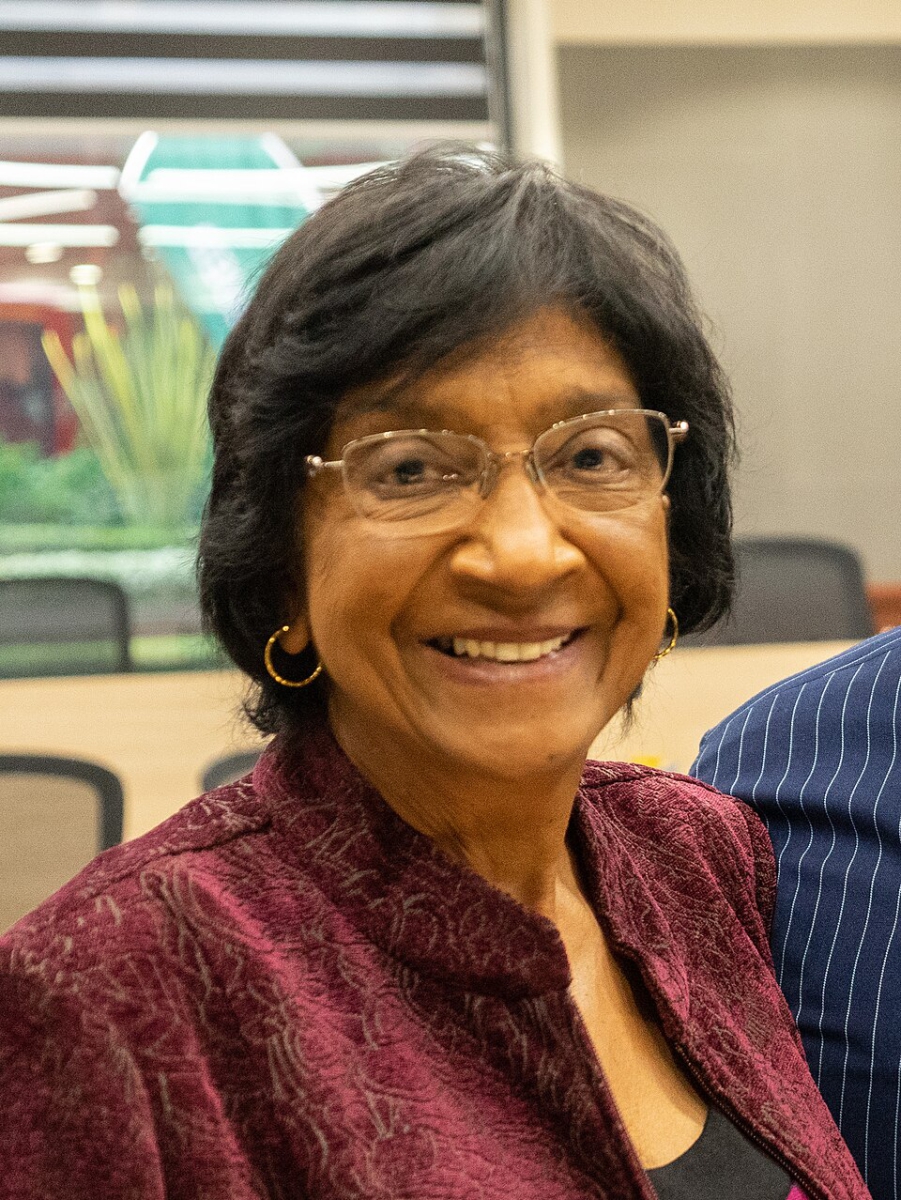 On 9 October, the 2026 Nobel Peace Prize was awarded to the South African jurist Navanetham "Navi" Pillay (born 23 September 1941). She served as the United Nations High Commissioner for Human Rights from 2008 to 2014. A South African of Tamil origin, Pillay was the first non-white female judge of the High Court of South Africa. She has also served as a judge of the International Criminal Court and president of the International Criminal Tribunal for Rwanda.
She was awarded the Nobel Peace Prize for her efforts to promote peace and international law. In its announcement, the committee highlighted Pillay's contribution to the prosecution of war crimes, crimes against humanity and genocide, and to strengthening international legal institutions. It singled out her influence on the Rwanda tribunal's recognition that rape and sexual violence could constitute crimes against humanity and genocide. The committee placed the award in the context of increasing armed conflict and political pressure on international courts and judges, arguing that legal accountability and justice for victims were essential to lasting peace.
Pillay became the first South African woman to be awarded the Nobel Peace Prize. She is the fifth South African individual to do so, after Albert Luthuli (1960); Desmond Tutu (1984); and Nelson Mandela and FW de Klerk, who shared the prize in 1993.
(Source: Wikipedia accessed on 13 October 2026).
Selected publications
Ankumah, Evelyn A., The International Criminal Court and Africa: one decade on (Cambridge, 2016).
Broun, Kenneth S, Black lawyers, white courts: the soul of South African law (Athens, Ohio, 2000).
Posted on 13 October 2026, last modified on 13 October 2026