

Akwaeke Emezi: on identity, spirituality and gender
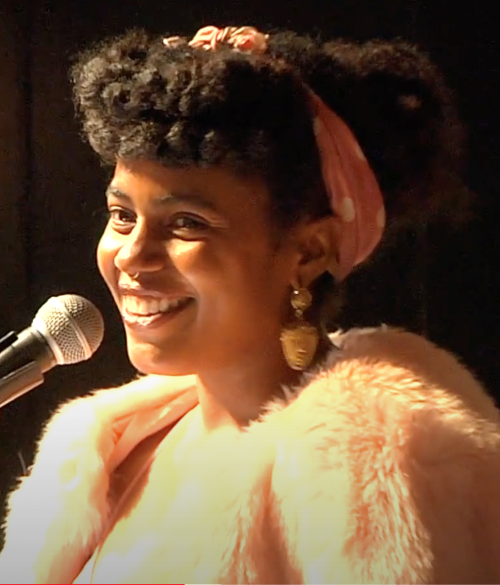 Akwaeke Emezi is a Nigerian fiction writer, visual artist, and multi-award-winning author whose work spans speculative fiction, romance, memoir, poetry, music, film, and visual art. They are best known for their acclaimed novels Freshwater (their debut in 2018), Pet, and the New York Times bestselling The Death of Vivek Oji. Their writing explores questions of gender, queer identity, spirituality, trauma, belonging, and the ways individuals experience dislocation from their identities and communities. Emezi writes for both young adult and adult audiences, with LGBTQ+ themes frequently at the centre of their work.
Born in southeastern Nigeria in 1987, Emezi is of Igbo Nigerian and Sri Lankan Tamil heritage. Their father is Igbo Nigerian, while their mother is the daughter of Sri Lankan Tamil immigrants who lived in Malaysia. Emezi grew up in Aba, Nigeria, before relocating to the United States at the age of sixteen to attend college. They are now based in Brooklyn, New York.
Emezi identifies as non-binary and transgender and uses they/them pronouns. Their identity and lived experiences are deeply connected to the themes that recur throughout their work. Through characters who often experience a sense of displacement or dislocation from themselves, their bodies, or their communities, Emezi examines how identity can be shaped, challenged, and reimagined.
In their artist statement, they write about Freshwater as part of a multidisciplinary series depicting their progression as an ọgbanje, “from unawareness to clarity.”
An ọgbanje (which literally translates as “children who come and go”) is a term in Igbo mythology and traditional Odinani religion for a malevolent spirit child who repeatedly dies and reincarnates within the same family to cause grief and misfortune.
In an interview published on The Rumpus, they clarify what ọgbanje means to them and why it’s central to their work:
“
It’s a bit of a difficult term to describe, just because it’s not an English term. Most of the times it gets translated as a spirit that’s born into a human body. But I’ve been finding that people start thinking of it as a binary. They think: “Is it really a spirit if it’s in a human body?”. And they start trying to divide it into two because the description splits it that way. Really, it’s not one or the other. It’s both at the same time. It can’t be split.
It’s part of Igbo reality. Part of the ontology of the culture where there would be these children who were called “born to die.” They get born, and they die repeatedly. And the point of it is allegedly to torment the mother. It’s central to my work because when I started doing this work, I’d been trying to understand suicidality, and Western lenses that were usually around mental health really weren’t helpful. And the only thing that sticks for me was going back and choosing a different lens, and ọgbanje was the one that made a lot more sense than the “mental health” descriptions of what was going on.
Freshwater is an account of a contemporary ogbanje. The ideas that people have around ọgbanje are usually precolonial. A lot of things from our culture, our reality, were colonized, so to speak. And then it became, “Oh, all these things you believe in aren’t actually real.” Because of Christianity, ọgbanje are considered superstition or evil. So most accounts of ọgbanje are older ones, or carried through stories, but it’s faded very much from how it used to be.”
 Emezi explores these themes of gender, identity, trauma and belonging by dismantling Eurocentric, colonial frameworks and replacing them with indigenous Igbo cosmology. Instead of treating non-binary gender, neurodivergence, or trauma through a purely Western psychological lens, Emezi frames them as sacred, fluid, and deeply rooted in metaphysical realities.
In Freshwater, the protagonist, Ada, is an ọgbanje, part human and part spirit. Because the spirit world transcends human gender binaries, Ada’s shifts in gender identity and sexual orientation are driven by the various male, female, and non-binary spirits inhabiting her flesh. Emezi uses this ontology to reject Western binaries, presenting gender transition as a form of transgender spirituality and pre-colonial African logic and decolonises contemporary ideas of gender, selfhood, and sanity by reasserting indigenous Igbo spirituality as an absolute reality rather than mere folklore.
Since Freshwater, Emezi has written several other novels with similar themes as well as young adult novels where spirituality meets the paranormal, fantasy and romance, inspired by precolonial Igbo culture and deities. Their speculative and fantasy work combines Igbo cosmology and spirituality, as well as exploring (transgender) identity, multiplicity and re-indigenisation
Their creative practice extends beyond literature: in March 2024, they released their debut EP, Stop Dying, You Were Very Expensive!, further expanding their work into music.
They are also a visual artist whose multi-disciplinary practice incorporates paintings, experimental film, and the fabrication of ritual objects. Through their work, they explore embodiment, incarnation, and sacred rites, reflecting on the space between corporeality and the spirit world.
Emezi also maintains a significant presence on social media, particularly Instagram, where they are known as @yungdeadthing. Across their different creative forms, their work continues to engage with questions of identity, transformation, spirituality, and the search for belonging, making them a distinctive and influential voice in contemporary literature and culture.
Their debut dark epic fantasy novel, Eclipse & the Wolf, is forthcoming from Harper Voyager in February 2027.
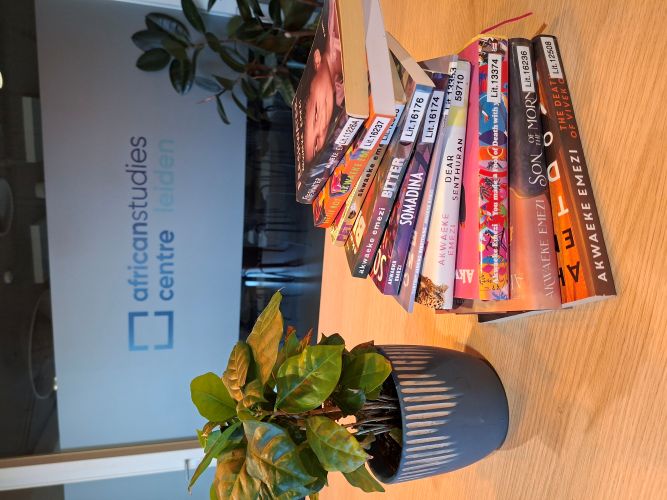
The African Library is in possession of eleven of their published works, including novels, poetry, a memoir, and a short story included in a short story anthology.
Angela Robson
Sources and links
- Akwaeke Emezi's books in the African Library
- Akwaeke Emezi's personal website
- A spirit born into a human body: talking with Akwaeke Emezi / Deesha Philyaw. The Rumpus: 21 February 2018.
- Decolonizing queer sexualities: a critical reading of the ogbanje concept in Akwaeke Emezi’s Freshwater (2018) / Tina Magaqa, & Rodwell Makombe. African Studies Quarterly, vol. 20 (2021), no. 3, pages 24-39.
Posted on 29 September 2026, last modified on 1 October 2026