

Library Weekly
The ASCL's Library Weekly is our library’s weekly spotlight on African people and events. Inspired by the SciHiBlog, this service is based on information retrieved from Wikipedia and Wikidata and is completed with selected titles from the ASCL Library Catalogue.
N.B. The weeklies are not updated and reflect the state of information at a given point in time.
Library Weekly archive
International Coffee Day
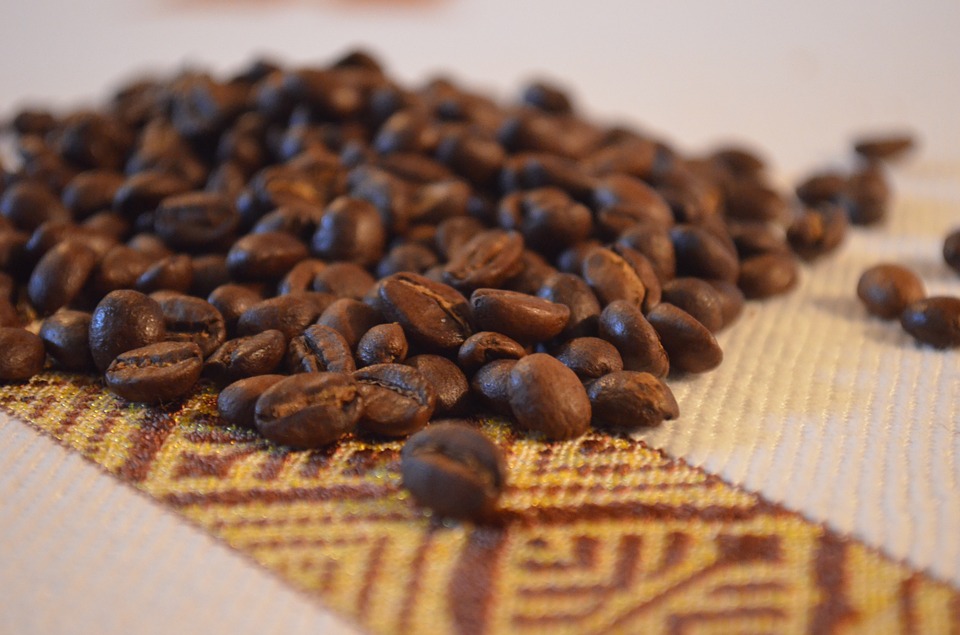 On 1 October, we celebrate International Coffee Day, a global celebration created by the International Coffee Organization, to bring coffee lovers around the world together for a single day dedicated to coffee. With events occurring in places around the world, the day is used to promote and celebrate coffee as a beverage. In addition, the occasion is also used to promote fair trade coffee and to raise awareness for the plight of the coffee growers.
The exact origin of International Coffee Day is unknown. A similar event was first promoted in Japan in 1983 by the All Japan Coffee Association. In the United States "National Coffee Day" was mentioned publicly as early as 2005. However, the name "International Coffee Day" was first first celebrated in 1997, by the International Coffee Organization and made into an annual celebration in early April 2001.
Some countries also celebrate their own national coffee days at various dates throughout the year. For example, Ethiopia, often regarded as the birthplace of coffee, celebrates a National Coffee Day on 15 September.
On 10 March, 2026, the UN General Assembly officially adopted 1 October as International Coffee Day.
(Source: Wikipedia accessed on 1 October 2026).
Selected publications
Francis, Nick, en Marc Francis, Black gold: wake up and smell the coffee (Amsterdam, 2007).
Gazemba, Stanley, Callused hands (Oakville, 2013).
Hatungimana, Alexandre, Le café au Burundi au XXe siècle: paysans, argent, pouvoir (Paris, 2005).
Kouassi, J., Au cœur du mystère: le binôme café-cacao en Côte d’Ivoire (Côte d’Ivoire, 2025)
Vaart, Janet van de, Buna Bet: koffie (Amsterdam, 2006).
Posted on 23 September 2026, last modified on 2 October 2026
Pages
Posted on 11 January 2021, last modified on 17 October 2023