

Polygyny: an African female writer’s perspective
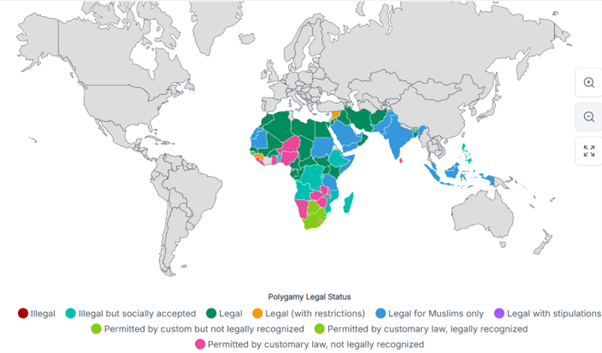 Marking International Women’s Day, 8 March, the African Studies Centre Library highlights a few novels written by female African writers dealing with the topic of polygamy. The umbrella term polygamy is often used to indicate heterosexual marriages between more than two partners, but since polyandry (one wife, multiple husbands) is very rare in Africa, for this Library Highlight the more precise polygyny (one husband, multiple wives) is preferred wherever the context clearly indicates this practice. Most of the polygyny discourse in Africa approaches the subject from at least one of four perspectives: human rights, religion, law, or health.
Human rights
From a universal human rights perspective many authors argue that polygyny violates women’s human rights and dignity and aggravates marital inequality (Kelly 2005). Whether or not this discourse is another form of Western moral imperialism is tested by Bowan (2013) and Yemo (2025).
Religion
The outspoken feminist Dr. Nawal El-Saadawi stated at a public meeting in Toronto in which she also touched on the topic of polygyny: “The most restrictive elements towards women can be found first in Judaism in the Old Testament, then in Christianity, and then in the Quran" (quoted in Abdel Azeem 2011). Whereas the Jewish perspective (based on the Tenach, so in favour of polygyny) is hardly pronounced in the African discourse, most of the debates are between Christians and Muslims. In the Africa Bible Commentary Isabel Apawo Phiri mentions (as an excursus from 1 Kings 11:1-13 where king Solomon marries 700 wives and 300 concubines) that although polygyny was widespread in the Middle East, the teachings of Jesus and the other New Testament writers remain quiet about the issue of polygamy. However, she concludes in favour of monogamy, as a considerable percentage of African Christians nowadays do. Phiri states that “the original plan at creation was for the marriage of one man and one woman. […] the Biblical examples show that polygamous families were full of quarrels, [… ] The majority of African women theologians do not support polygamy because it dehumanizes women […] [and] shows a lack of respect for the dignity of women as full human beings, created in the image of God.” (Adeyemo 2010:430). However, “nowhere in the Bible does God explicitly condemn a person for polygamy” [idem]. The Islamic (polygynous) point of view does not need a lot of apologetics in an African context. Most of the interfaith polemics concern the defence of Muhammad marrying 13 wives and concubines (Farsy 1964 & Farsy 2009; Shou 1984), whereas Muslim men are allowed to marry only four. The religious discourse is dominated by male writers and only occasionally women touch the subject (e.g. the Nigerian Miftahudeen 2013).
Law
Whether or not polygyny and/or polyandry should receive a legal status in marriage law has been a heated debate in most African countries. For example in 1988, when the Tanzanian politician Sophia Kawawa proposed to reform Islamic laws on polygamy and inheritance, intense protest and riots in several cities broke out. However, the outcome of legal reforms in the post-colonial era is that in most African countries polygyny is a valid form of marriage, whereas polyandry is not [Figure 1#]. Another controversial issue is the inheritance in polygynous marriages, especially where it concerns partners from different faiths (Ayodo 2024).
Health
Opponents to polygyny often quote medical studies based on mathematical models which did not differentiate between concurrent sexual relations inside or outside a legal matrimonial framework, and therefore concluded that women in a polygynous marriage were subjected to a higher risk of HIV infections (Kelly 2005). Later investigations concluded the opposite: the association between polygyny and HIV prevalence is negative, both at the national and subnational level (Reniers & Watkins 2010). This was a confirmation of the argument used by (mostly Islamic, mostly male) authors that God’s commandments are wholesome and healthy for both societies and individuals (Al-Jabry 2001).
African female perspectives on polygyny in creative writing
This selection of two anthologies and eight writers from six African countries covers quite a range of diverse perspectives and regions. Most of the writers appear to condemn the practice of polygyny but not all of them. Ken Bugul for example emphasises the positive aspects from a female perspective. The majority of stories are set in an African context but Calixthe Beyala’s novels deal with the particular  challenges of polygyny in a French setting. Only novels in French (for which I thank my former colleague Elvire Eijkman) and English were selected although it stands to reason that a significant number of titles in this field are written in African languages.
Africa general
Browdy de Hernandez, J., Dongola, P. , Jolaosho, O. & Serafin, A. (Eds.).(2011). African women writing resistance : an anthology of contemporary voices. Pambazuka. Part three deals with “Challenging the institution of marriage”
“For African women, as for women across the world, marriage is an institution that can be fraught with ambivalence. The pieces in this section all speak to the challenges African women can face as wives, from the day of their wedding right through to the death of their husbands.” [from the introduction to part three]
Northern Africa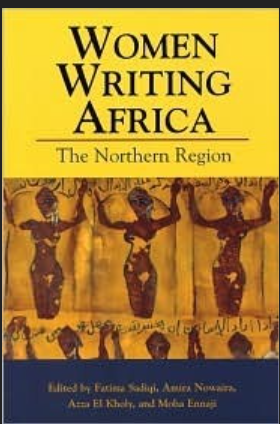
Ṣadīqī, F. (2009). Women writing Africa : the Northern region. The Feminist Press at the City University of New York.
"The fourth volume, focused on Northern Africa, includes more than 100 texts from Algeria, Egypt, Mauritania, Morocco, Sudan, and Tunisia. This pioneering volume includes works from 3000 BCE to the present; from an Egyptian Queen's marriage proposal to contemporary women promoting new marriage and family laws. In addition to Berber poetry and oral history, much prose in the volume is original, and many names will resonate with modern readers, including Leila Abou Zeid, Amina Arfaoui, Salwa Bakr, Assia Djebar, Nawal El Saadawi, and Fatima Mernissi. Important themes include polygamy, FGM, the veil, education, and political participation.” [from the introduction]
Cameroon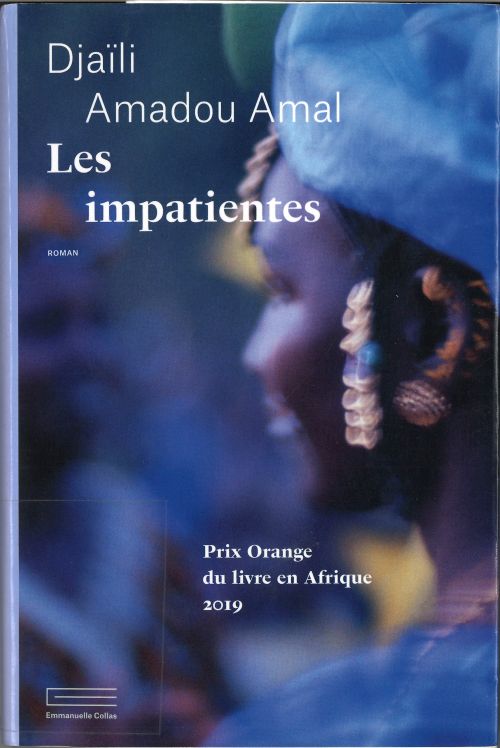
Amadou Amal, D. (2021). Les impatientes : roman. Editions Emmanuelle Collas.
Amadou Amal, D. (2025). Le harem du roi : roman. Emmanuelle Collas.
“Après Les Impatientes et Cœur du Sahel, Djaïli Amadou Amal nous livre une histoire d’amour bouleversante et romanesque d’une cruelle actualité. Dans Le Harem du roi, elle brise à nouveau les tabous sur le mariage forcé et la polygamie, en dénonçant la servitude en Afrique et en donnant une voix à celles et ceux dont on ne connaît pas l’existence.” [babelio.com]
Beyala, C. (1992). Le petit prince de Belleville : roman. Albin Michel.
Beyala, C. (1993). Maman a un amant. Editions J’ai lu.
“When the very prolific Beyala wrote Le Petit Prince de Belleville in 1992 and its sequel, Maman a un amant, in 1993, she intended the novels to depict truthfully the lives of a polygamous immigrant family from Mali. [...] The conditions of life as an immigrant made the already unsatisfactory consequences of a polygamous marriage all the more intolerable. Marlise Simons explains why this is so in her article, "African Women in France Battling Polygamy" . In an interview with a Mauritanian woman living in France, Simons quotes her as saying, "If you don't get along with your co-wife in Africa, you do not pass by her door and she does not pass by yours" (A6). Another interviewee added, "An African woman will not sleep with her husband in a bed that another woman uses. Here [in France] we must take turns". [...] Through various dialogues and actions of her characters, Beyala reinforces the idea that the immigrant experience has made the injustices of polygamy even more unbearable and that in no way is the western way of life to be credited for liberating the African woman.” [Toman 2000]
Côte d'Ivoire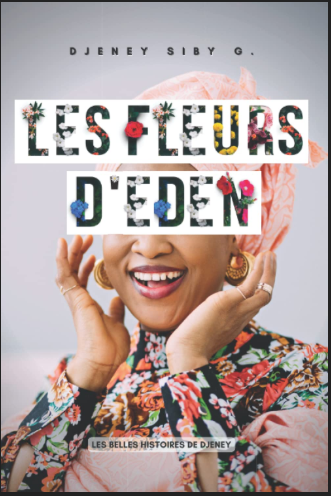
Gbane, D. S. (2024). Les fleurs d’éden: les belles histoires de Djeney. Trait D’Union.
“Entrepreneure à succès, épouse et mère de quatre enfants à 42 ans, Maïra est une femme à qui la vie a tout donné. Son époux, Cheikh ne ménage ni moyen, ni effort pour la rendre heureuse. Contre toute attente, son paisible foyer s'apprête à être chamboulé: l'arrivée d'une seconde épouse va tout remettre en question.” [Publisher's page]
Gambia
Camara, F. (2024) His other woman. Serre Kunda, The Gambia: Baobab Books, 2024.
“This book is a nonfiction novel that delves into the theme of women's empowerment […] navigating polygamous marriages.” [Publisher]
“At its essence, the novel unravels Anyi’s arduous journey as she grapples with the unraveling of her 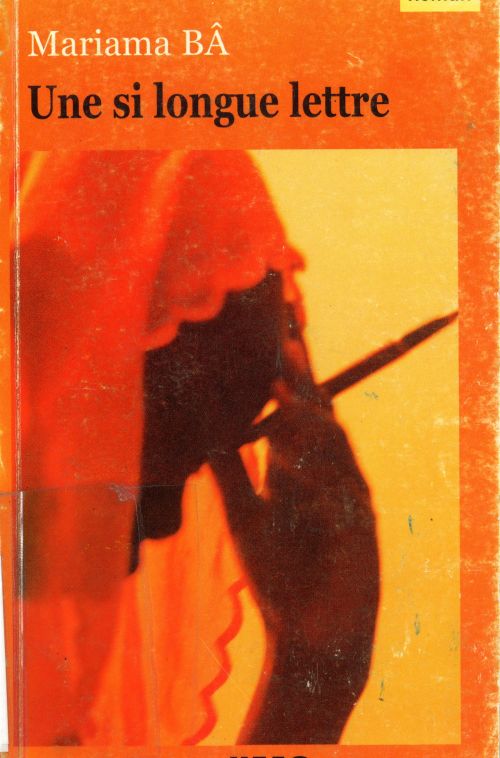 marriage to Esamai. Right from the start, readers are drawn into Anyi’s longing for a love slipping through her fingers. Through vivid descriptions and evocative imagery, the author paints a poignant picture of Anyi’s profound sadness, allowing readers to empathize with her struggles within a troubled relationship.”(Book review at: https://fatunetwork.net/book-review-of-his-other-woman-a-novel-by-fatou-...
Book release: https://www.youtube.com/watch?v=YB4uooLRT5E)
Senegal
Bâ, M. (2002). Une si longue lettre : roman. Nouvelles éditions africaines du Sénégal. Also available in English and Dutch.
 “So Long A Letter is the story of Ramatoulaye, a recently-widowed Sengalese [Senegalese] woman, as she writes to her long-time friend Aissatou. It is the articulate, often anguished narrative of a Muslim woman faced with the sudden second marriage of her husband of twenty-five years. Although polygamy is accepted by her religion and her society, Ramatoulaye feels rejected and betrayed. Yet she chooses to remain in her marriage and prepares to " share equally" her husband with her new co-wife, as dictatedby Muslim law. Her husband, however, abandons her completely, to manage their twelve children alone. Upon his death five years later, she is faced not only with grief and confused emotion but also with enormous debts he compiled in wooing his new young wife and her greedy mother. Ramatoulaye's dignity and quiet strength overcome her bitterness and pain, and she is able to begin forging her own happiness again while responding to her family's changing needs.” [abstract by Anne E. Freitas]
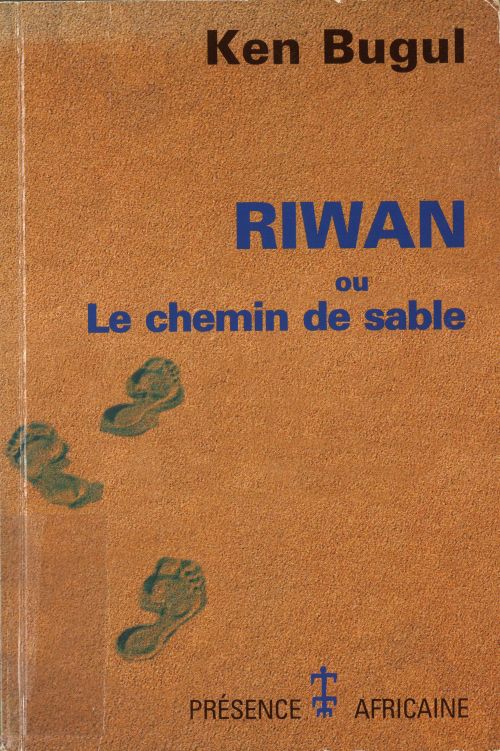
Bugul, K. (1999). Riwan ou le chemin de sable : roman. Présence africaine.
“La polygamie est un thème récurrent pour les romancières sénégalaises qui prônent dans leur majorité sa suppression. Ken Bugul se singularise par des positions contradictoires. Dans sa première œuvre Le Baobab Fou, elle fustige cette institution en mettant l’accent sur ses aspects négatifs. Mais dans Riwan ou le chemin du sable elle en fait l’éloge allant jusqu’à intégrer elle- même un ménage polygamique. Le présent article étudie les motifs de son revirement. Dans un premier temps nous avons donné les raisonspour lesquelles la romancière rejette la polygamie en nous intéressant à son enfance et à son éducation de «femme moderne». Dans un second temps, nous avons analysé sa glorification de cette institution en abordant sa vie sociétale et sa pratique religieuse. Dans un troisième temps, nous nous sommes intéressée aux différentes contradictions qui jalonnent les diverses positions de cette romancière” [Badji 2021]
South Africa
 Busisiwe Khumalo wrote a string of books which she first serialized on platforms like WordPress and social media and later printed at her own costs. Most of these titles deal to some extent with polygynous relationships. These three are a selection:
Khumalo, B. P. (2017). Raymond our husband (First edition.). Busisiwe Precious Khumalo.
“Professor Raymond Bogatsu is a determined man, hell-bent to trap her in. He wins her heart, he wins her love, then traps her in the shackles of two is better than one setup. The trio covenant of not ME, HIM or HER but WE till end of time.” [author]
Khumalo, B. P. (2019). Anelisa : I’m his first wife. Busisiwe Precious Khumalo.
Khumalo, B. P. (2016). My trio covenant : (love multiplied). Busisiwe Precious Khumalo.
Zimbabwe
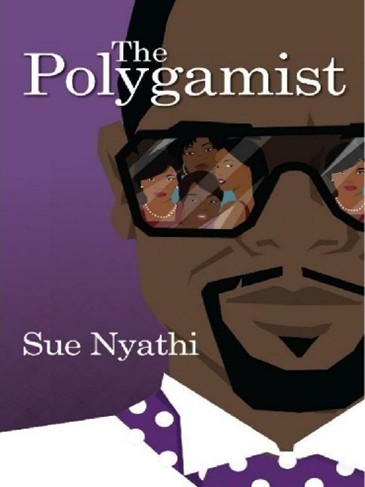
Nyathi, S. (2012). The polygamist. Logogog Press.
“The Polygamist weaves a tale of four women whose lives become intertwined when they all fall for wealthy banking magnate Jonasi. Seemingly indomitable, and oozing money, power and sex appeal, Jonasi is about to complicate all their lives forever.” [Back cover]
Gerard C. van de Bruinhorst
Bibliography
Abdel Azeem, Sherif. Women in Islam: the myth and the reality. S. l.: Conveying Islamic Message Society, 2011. (Free access)
Adeyemo, Tokunboh, et al. Africa Bible Commentary. Second edition ed. Nairobi, Kenya, Grand Rapids, Mich.: WordAlive Publishers ; Zondervan, 2010.
Al-Jabry, J. S. Siri Za Ukimwi. [Mombasa]: Alnadhiry computer services, 2001. [private collection]
Ayodo,Harold. Polygamy and property: How to protect your assets as a first wife. The Nairobian. (2024, August 27). (Restricted access, text also available via NexisUni)
Badji, Marguerite Oubadjile, Le regard controversé de Ken Bugul sur la polygamie. Akofena vol 1, no. 2. 2021, pp. 289-304 https://www.revue-akofena.com/wp-content/uploads/2021/09/22-T02-82-pp.-2...
Bin Salih, Mohammed. Law of inheritance: an Islamic perspective. Accra: Salihsons, 2010.
Bowan, Lorraine. Polygamy and patriarchy: An intimate look at marriage in Ghana through a human rights lens. Contemporary Journal of African Studies 1.2 (2013): 45-64.
Browdy de Hernandez, Jennifer, Pauline Dongala, and Omotayo Jolaosho. African women writing resistance: an anthology of contemporary voices. Madison, Wis.: University of Wisconsin Press, 2010.
Farsy, Abdallah Saleh al-. Wakeze Mtume Wadogo. Mombasa: Adam traders, 1964.
Farsy, Abdullah Saleh al-. Wakeze Mtume Wakubwa Na Wanawe. Mombasa: Adam traders, 2009.
Jadeed, Moza, Attiya Waris, and Celestine N. Musembi. The application of Islamic inheritance law in independent and contemporary Kenya: a muslim's right to equality and freedom from discrimination. Africa Nazarene University Law Journal 8.1 (2020): 30-64.
Kelly, L. M. Polygyny and HIV/AIDS: a health and human rights approach. Journal for Juridical Science 31.1 (2006): 1-38.
Kubeha, Hamza. Haki Ya Mwanamke Katika Mirathi Kwa Mujibu Wa Sheria Ya Kiislamu. Kigoma: self-published [private collection]
Miftahudeen, Rafiah. Muslims and the practice of polygamy. Oyo: Adetunji Printing Press, 2013.
Mujlisul Ulama of South Africa. Kitābul Meerāth = the Book of Inheritance. New Delhi: Mohammed Yunus for Idara Impex, 2014.
Reniers, Georges, and Susan Watkins. Polygyny and the spread of HIV in sub-Saharan Africa: a case of benign concurrency. Aids 24.2 (2010): 299-307.
Shou, Jukaeli. Kwa Nini Mtume Muhammad Alioa Wake Wengi? Dar es Salaam: Bilal Muslim Mission of Tanzania, 1984.
Toman, Cheryl. A day in the life of Belleville: the new face of contemporary France in a Paris neighborhood. French Prose in 2000 (2000): 257-63.
Yemo, Rebecca. Embracing polygamy: a modus vivendi response to the human rights position. Governing Differences. Edward Elgar Publishing, 2025. 95-110.
Posted on 4 March 2026, last modified on 12 March 2026