

Honouring Ustadh Mahmud Mau: A treasure of Swahili poetry
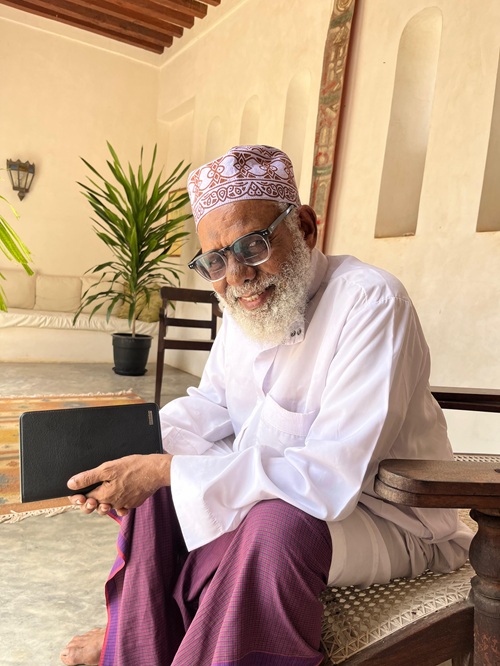
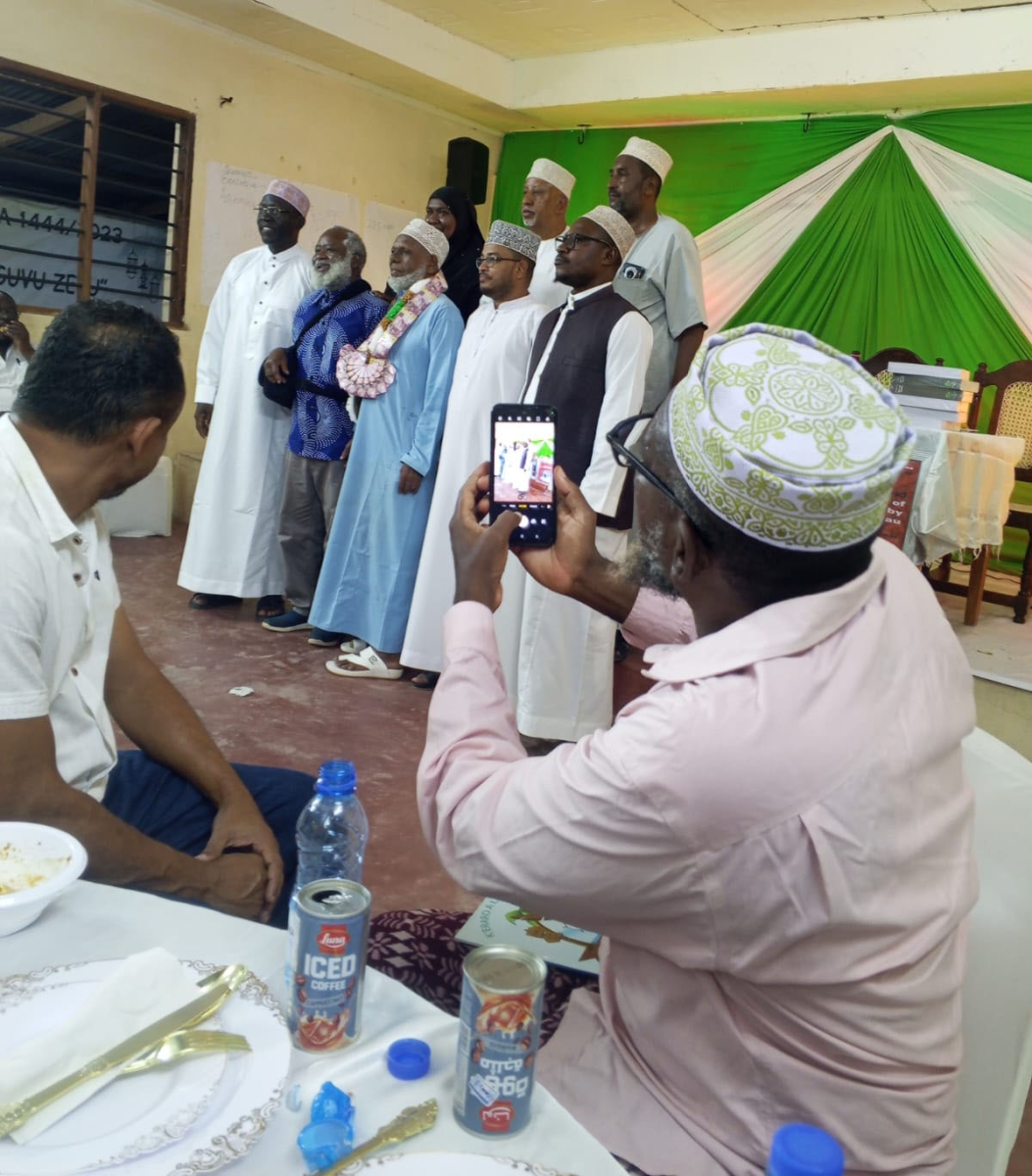
On 23 August 2026, poets, scholars and cultural practitioners from Kenya, Tanzania and Pemba Island gathered in Lamu (Kenya) to honour Ustadh Mahmud Mau for his contribution to Kiswahili poetry and Swahili literary heritage. Celebrated as a hazina ya ushairi wa Kiswahili - a treasure of Swahili poetry - Mau was recognised by the community in which his work and intellectual life are deeply rooted. Annachiara Raia, who co-led the digitisation of Ustadh Mahmud Mau’s archive with Mau himself, reflects on his significance to African literature from this Lamu vantage point, drawing on twelve years of engagement with Swahili literature in the wider Indian Ocean world.
Many scholars of Swahili literature in Europe and elsewhere have known and worked with Ustadh Mau over the years. Although his intellectual life has developed largely outside the university, his poetry and scholarship have since long brought him into conversation with international academic networks, including through Swahili poetry workshops and visits in Germany.
For me, this connection goes back to 2014, when, as a PhD researcher, I first stepped into his home library in Langoni area. I had been advised to seek him out as a ‘local informant’ and respected Islamic scholar who could help me decipher the language and reconstruct the historical contexts of nineteenth-century Swahili manuscript poetry on the narrative of Yusuf. His knowledge and insights proved fundamental to my research and eventually to my first monograph. They also helped shape the kind of African literature scholar I have become.
Mau’s home library
But something else happened during the many hours I spent with him. Mau’s home library - a remarkable space filled over the years with books collected from different parts of the world - is what he affectionately calls his kituo: the place where he stops, reads, writes, rests and receives visitors. While working there with nineteenth-century manuscripts, I became fascinated by Mau’s own handwritten poetry, composed in Swahili in Arabic script. An imam, scholar and prolific poet, he has written more than one hundred poems, from short lyrical mashairi to longer narrative tendi. Many are autobiographical works, others others are composed for weddings, graduations and pilgrimages, or in response to political and social events.
I had first entered Mau’s kituo looking for someone who could help me understand the circulation of a given textual tradition. Over time, I realised that the home library was itself an archive - and that the person I had initially been introduced to as a ‘local informant’ was a poet and intellectual whose own work demanded to be read and studied in its own right.
Years of collaboration followed. A considerable part of Mau’s handwritten and recorded poetry has since been preserved, digitised and made openly accessible through the combined efforts of local researchers, ASCL information specialist Ursula Oberst, and my own research. In 2023, Brill published In This Fragile World: Swahili Poetry of Commitment by Ustadh Mahmoud Mau, his first collection of selected poems translated into English.
African publishing
Mau’s recognition in Lamu also raises a larger question for African literary studies. A recent UNESCO report on African publishing, drawing on publisher Bibi Bakare-Yusuf, warns that the ‘hypervisibility’ of a small number of writers can obscure a much greater multitude of voices. African literature is far wider than the novels that reach internationally renowned publishers, literary prizes and our university syllabi. It also lives in manuscripts and notebooks, in African languages and local scripts, in oral performance and recordings, in private collections and across digital platforms.
The honour bestowed on Ustadh Mau by his own community is therefore more than an occasion for congratulations. It is also an invitation to us in academia to look beyond the already visible: to reconsider where we look for literature, whose voices we teach, and which forms of intellectual and literary work we choose to preserve and study.
Hongera sana, Ustadh Mau. Ad maiora!
Annachiara Raia
Photos: Left: Ustadh Mau in January 2026. Photo right: Ustadh Mau, standing in the middle, being lauded on 23 August 2026.
Posted on 4 September 2026, last modified on 24 September 2026