

In memoriam Emile van Rouveroy van Nieuwaal (1939-2025)
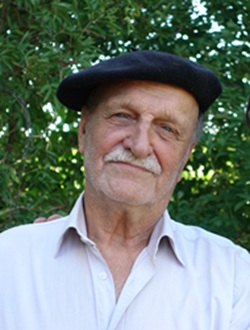 On 4 December Emile van Rouveroy van Nieuwaal died in Genne (Zwartewaterland, Overijssel). Van Rouveroy van Nieuwaal worked at the African Studies Centre from 1967 to 2002, when the ASC was not part of Leiden University yet. He became professor by special appointment at Leiden University on behalf of Leiden Law School in 1983, where he continued working until 2003.
Van Rouveroy was born into a military family in Eindhoven on 1 July 1939. In 1961 he passed his exam Gymnasium-A at Praedinius Gymnasium, in Groningen. From November 1961 to January 1963 he enlisted in the Royal Netherlands Army as a conscript, and was stationed in Dutch New Guinea from June to November 1962. At the end of that year, the Dutch government handed over the administration of the territory to Indonesia.
Academia
From January 1963 Van Rouveroy studied Law at Rijksuniversiteit Groningen, where he obtained his master's degree on 14 September 1967. One of Van Rouveroy's fields of study was 'non-western law'. He married Els Baerends, who studied cultural anthropology, on 16 February 1967. On the instigation of one of his Groningen professors Van Rouveroy met with Hans Holleman, the director of the African Studies Centre in Leiden at the time. This resulted in a position as a PhD student at the ASC Leiden from October 1967, and a permanent position at the African Studies Centre from October 1969.
 Van Rouveroy published his dissertation Vrouw, vorst en vrederechter. Aspekten van het huwelijksrecht, de traditionele en moderne volksrechtspraak bij de Anufòm in Noord-Togo in 1976 (French version: À la recherche de la justice. Quelques aspects du droit matrimonial et de la justice du Juge de Paix et du Chef Supérieur des Anufòm à Mango dans le Nord du Togo). He would prove to be Holleman’s only PhD candidate.
Chieftaincy and customary law
Van Rouveroy’s main academic interests were African chieftaincy and customary law. He published several books and articles about these topics, and organised conferences in Togo (1978, on land right reform), in Germany and in the Netherlands. In 1983 Rouveroy became professor by special appointment at Leiden University on behalf of Leiden Law School, at the same time retaining his position at the African Studies Centre. Teaching students gave new energy to his work and broadened his field of study to include decentralisation of power in Africa.
 At least 20 publications and films were made together with his first wife Els Baerends (1943-2014). When the marriage ended in the 1980s, their professional partnership also stopped. At the same time, the attention of the African Studies Centre shifted away from the study of African law, instead giving more attention to social, agricultural and political developments and to the history of Africa.
Van Rouveroy supervised several PhD candidates: Ath. Molokomme (1991), Cyprian Fisiy (1992) and Klaas van Walraven (1997). As Van Walraven told me, Van Rouveroy particularly stressed the importance of fieldwork.
Films
In his second year at the ASC (1968-69) Van Rouveroy also followed a course in producing scientific documentaries at CNRS in Paris. His interest in film was there from the start. In 1973, Van Rouveroy produced the short film Mbambim, a lineage-head. The film portrays Mbambim and his family relations and life in Northern Togo. The film was broadcast by IKON television in 1980.
Six years later, the film A Toad in the Courtyard was produced by Emile van Rouveroy and Els Baerends. The film, spoken in local language with English commentary and subtitles, portrays Na Tyaba Tyekura, former prince of the Anufôm in the city of N'zara in Togo. He tells of his career as a monarch and as a judge, and gives an interesting view on his life.
In 1980 Rouveroy produced the film À la recherche de la justice, also located in Togo. The subject of the film is the social-juridical position in West Africa. Van Rouveroy succeeded in sketching the legal system as a work in progress, and how three systems enforced each other: local rights, native law and the official law system.
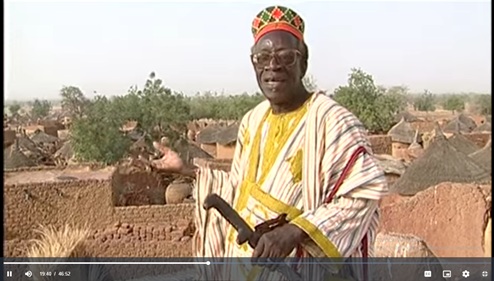
The film Democratic adventure in Togo was published in 1992. The film addresses the issue of ‘traditional leaders trapped between state and people’. Bonnet rouge (2000, click image left) was made by Emile together with his son Maarten van Rouveroy. This film reveals the socio-political role of the traditional leaders of the Mossi in Burkina Faso. The film illustrates how they deal with state officials and how they develop new strategies to adapt to political, administrative and legal changes. J'y crois. La route de la décentralisation au Mali (2002), also made by father and son Van Rouveroy, is a technically accomplished film, about the role of citizens in Mali. The decentralisation process of the 1990s and its practical consequences are shown in a very natural way.
Farmer
Van Rouveroy was a complicated man. To his relief, he also ran a farm in his hometown Genne (Zwartewaterland), and his life as a farmer was completely separate from his academic life. In the course of 40 years Van Rouveroy made six documentaries about certain aspects of life in rural communities (healing practices in Zalk (IKON, 1976), wedding customs, life in Staphorst). His last film (Tot in het derde geslacht, 2016) was a very personal one: about his family and the Second World War. His father and three of his older brothers were part of the 5. SS-Panzer Division Wiking, and his oldest brother Jan was killed in Russia in January 1943. The film was an effort to try to understand that traumatic period.
 Emile van Rouveroy worked at the ASC for a period of 35 years, from 1967 to 2002. Times were vibrant, and the books, conferences, research by his PhDs and films he leaves behind tell a story.
On 8 December 2025 Emile van Rouveroy van Nieuwaal was laid to rest in a mycelium (fungi) coffin at De Sandvoirt cemetery in Hasselt (Overijssel). Our thoughts are with his family, relatives and friends.
Jos Damen, December 2025
Read more about Van Rouveroy's films and making them available on Wikimedia Commons.
Photo credits
Photo 1: Filmmaker, legal anthropologist and Africanist Emile van Rouveroy van Nieuwaal (2017). Photo: Robert Tempelaar
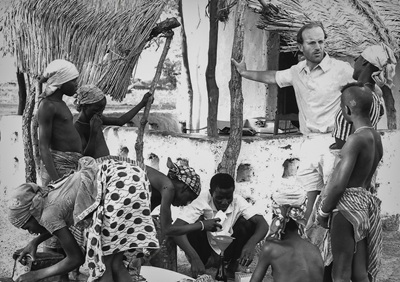
Photo 2: Emile Rouveroy in Togo (ca. 1980). Photo: Els Baerends
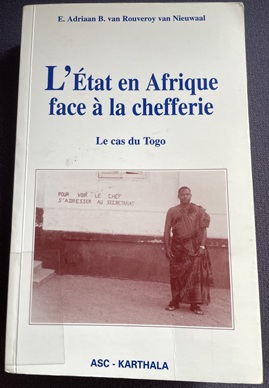
Photo 3: Cover L'État en Afrique face à la chefferie (Paris,1980)
Photo 4: Still from 'Bonnet Rouge, où vas-tu?'. Film by Emile & Maarten Rouveroy (2000).
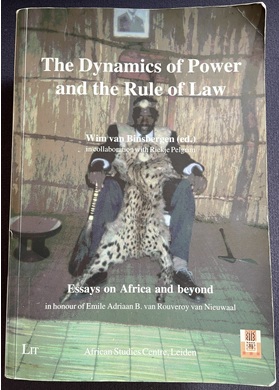
Photo 5: Festschrift in honour of Van Rouveroy (2003).
Photo 1: Filmmaker, legal anthropologist and Africanist Emile van Rouveroy van Nieuwaal (2017). Photo: Robert Tempelaar
Photo 2: Emile Rouveroy in Togo (ca. 1980). Photo: Els Baerends
Photo 3: Cover L'État en Afrique face à la chefferie (Paris,1980)
Photo 4: Still from 'Bonnet Rouge, où vas-tu?'. Film by Emile & Maarten Rouveroy (2000).
Photo 5: Festschrift in honour of Van Rouveroy (2003).
Posted on 15 December 2025, last modified on 23 January 2026