

Reimagining Africa: key reflections on the ELIAS meeting 2026
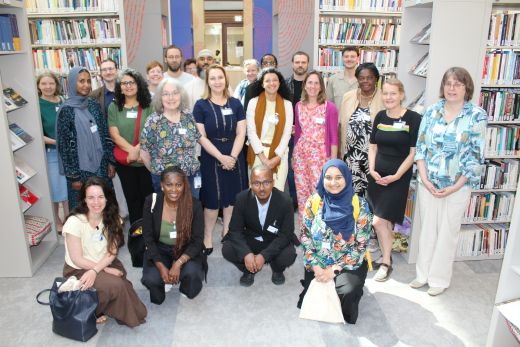 ELIAS returns to Leiden
On 19 June 2026, the annual meeting of the European Librarians in African Studies (ELIAS) network returned to Leiden, for the first time since it was founded. It took place in the newly opened African Library, located in the new premises of the African Studies Centre Leiden (ASCL). Nearly 30 participants from African libraries, museums, archives and universities across Europe and Africa attended, making it an interactive and engaging event. Over coffee breaks, lunch, drinks and dinner, there was ample opportunity to catch up, exchange news from the field, and discuss developments within our respective institutions.
Reimagining Africa from different perspectives
The theme this year was Reimagining Africa and explored how African collections can become more accessible, discoverable and meaningful for researchers, communities and wider audiences. This addressed a challenge familiar to many institutions: while European libraries and archives hold extensive collections relating to Africa, many of these resources remain underused because of barriers in discoverability, access, description and outreach. By bringing together colleagues from across Europe and Africa, the ELIAS network creates a space to exchange practical experiences and collaborative approaches for addressing these issues.
Highlights African Library
The day opened with presentations highlighting initiatives within the African Library itself. ASCL researcher Dr Tycho van der Hoog, introduced participants to the Stephen Ellis Archive, a remarkable collection preserving the personal papers of one of the most influential African historians of the late 20th and early 21st centuries and former director of the ASCL. The enormous and rich archive provides researchers with unique insights not only into Ellis’s scholarship, but also into the development of African Studies as a discipline, and some highly anecdotal episodes in his career that read like a spy novel. Dr Van der Hoog was involved in making the extensive catalogue description of the archive, so knows its ins and outs.
ASCL collection specialist Germa Seuren then explored the evolution of the African Library’s unique film collection. Her presentation demonstrated how the transition from DVDs to streaming services is reshaping collection development and expanding access to African and Africa-related films. The shift reflects broader changes in scholarly information services, where digital accessibility increasingly determines how collections are used and discovered.
Archives as Living Systems
Many of this year's presentations explored archives from unconventional perspectives, challenging assumptions about what constitutes an archive, who creates it, and whom it serves. Speakers demonstrated how archives increasingly function as living systems and even as 'counter-archives', challenging institutional power structures and expanding our understanding of knowledge preservation.
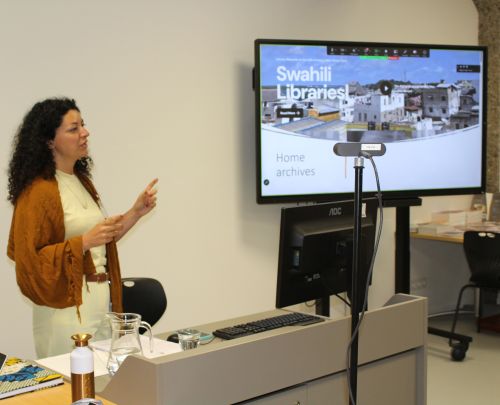 A particularly inspiring presentation focused on collaboration with heritage custodians on the Swahili coast of Kenya. Kenyan librarian Khadija Issa Twahir and ASCL researcher Dr Annachiara Raia shared their work on “Portable Swahili Libraries”, a project that identifies, preserves and digitises community-held heritage materials on the island of Lamu in Kenya. Their experiences highlighted that archives are not always physical collections stored in institutions. Knowledge may also reside in oral traditions, performances, photographs, cassette recordings and community memory. The presentation offered a powerful example of how preservation can strengthen living networks of knowledge while respecting local ownership and cultural contexts.
Questions of memory and representation formed another central thread throughout the meeting. Filmmaker and artists Misha Maseka and Sana Ginwalla presented the Zambia Belonging Counter-Archive, showing how community-sourced photographic collections can inspire artistic production, film, music and storytelling. Their work challenges the notion of archives as static repositories and instead positions them as active spaces where new narratives and creative practices emerge.
Similarly, researcher Dr Wafaa Taleb examined oral transmission as a vital archive of African memory. Drawing attention to the marginalisation of oral traditions within many institutional systems, she argued for approaches that recognise oral histories, storytelling, songs and embodied knowledge as central forms of cultural heritage. Her contribution encouraged participants to think beyond conventional archival models and to consider more inclusive ways of preserving and sharing knowledge.
Colonial and Missionary Archives
The afternoon sessions examined colonial archives and the ongoing process of decolonisation. Baudouin Mena Sebu presented the KADOC project “Discoveries”, which reassesses a large missionary library collection relating to the Democratic Republic of Congo. By involving Congolese communities and partner organisations in interpretation and classification processes, the project challenges conventional institutional models and promotes shared authority in the stewardship of colonial collections. 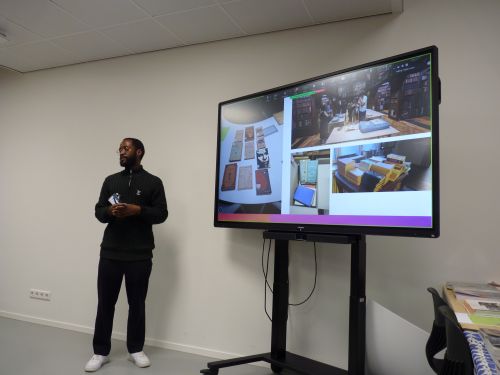
Dr Petr Valenta offered another perspective on colonial archives through his study of the Leipzig Mission in German East Africa. By comparing missionary records with ethnographic collections and human remains dispersed across European museums, he illustrated how different types of archives can reveal conflicting narratives about colonial encounters. His presentation demonstrated the importance of reading archival sources critically and considering what material collections can tell us alongside written documents.
Access and Outreach
The final sessions focused on access and outreach. Mariam de Haan from the British Library shared practical examples of how institutions can connect collections with communities through exhibitions, partnerships and educational programmes. Her presentation demonstrated that improving discoverability involves more than technology alone; it also requires building meaningful relationships with users and ensuring collections are relevant to diverse audiences.
The meeting also included a sneak preview of the new ALMEDA interface, presented by Ursula Oberst, information specialist at the ASCL. The African Literary Metadata Project is developing a digital repository for African informal literatures using Wikibase technology. By creating a user-friendly search environment, the project aims to make rich literary metadata accessible to researchers without requiring specialist technical skills. It provided a fitting conclusion to a day that consistently emphasised accessibility, innovation and user-centred design.
Cross-cutting Themes
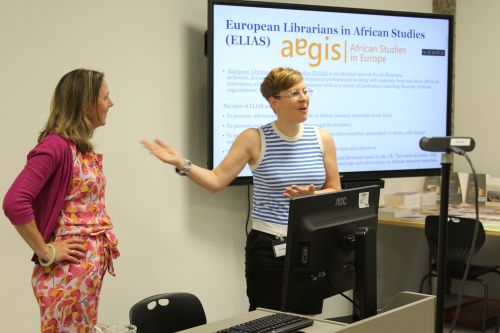 Across all presentations, several themes emerged clearly: collaboration across continents, the ethical stewardship of colonial collections, the recognition of community knowledge, and the growing importance of digital access. Most importantly, speakers demonstrated that reimagining Africa is not simply about reinterpreting existing collections. It is about creating new relationships between institutions and communities, embracing multiple forms of knowledge, and ensuring that African voices play a central role in how heritage is preserved, described and shared.
The ELIAS Meeting 2026 showed the continuing value of professional exchange within the African Studies library community. Through case studies, critical reflection and practical examples, participants explored ways to transform shared challenges into opportunities. The result was an inspiring and forward-looking conversation that reaffirmed the role of libraries and archives not only as custodians of knowledge, but also as active partners in preserving, creating and reimagining African futures.
Join us in Lisbon in 2027
In case you missed out on this year’s edition, join us in 2027. The 2027 ELIAS meeting will be held on 29 June 2027 in Lisbon, prior to the ECAS Conference (30 June - 3 July 2027). More information and registration details to follow.
Liesbeth Kanis, Head of the African Library
Posted on 25 August 2026, last modified on 24 September 2026