

ASCL Seminar: Cape Town: The Making of a Colonial City
Primary tabs
Several nineteenth-century African cities were characterised above all by their cosmopolitanism. Historically urban centres such as Dakar, Lagos, and Zanzibar were integrated into expanding imperial networks and drew in people of diverse origins. The cosmopolitan nature of these urban environments was underwritten by international commerce, often dominated by overland and transoceanic slave trades. As the century progressed, colonial powers increasingly viewed these centres as sites from which to project imperial power. Thus, the cosmopolitan city was transformed into a different entity, the colonial city and its variant, the settler city. In a few instances, such as Nairobi, Salisbury, and Lusaka, new cities were built to perform this function. In all cases, these attempts at social transformation were reflected in changes to the built and social environment, while the desire to enforce racial segregation was probably the most common driving motor, especially in southern and eastern Africa.
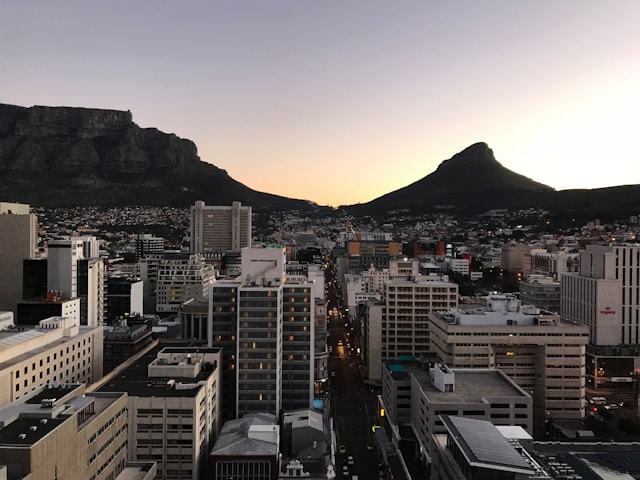
This ASCL Seminar by visiting fellow Wayne Dooling seeks to situate nineteenth-century Cape Town within this broader history of Africa’s urban past. Cape Town, like Luanda, was a cosmopolitan and colonial city from its origin in the mid-seventeenth century. European settlers were of diverse backgrounds, while slavery provided the economic and social basis of the settlement. Enslaved people and political exiles from the Indian Ocean World gave the city a cosmopolitan flavour from the start. Slavery was oppressive and extremely violent by its very nature, but city air gave greater freedoms than elsewhere and permitted the development of an underclass culture that cut across racial categories. At the time of the British conquest in 1806, Cape Town was home to more enslaved than free people, while Islam offered the city’s underclass – slave and free – a moral framework of resistance. As Cape Town’s population grew by several thousand in the wake of slave emancipation, British merchants and colonial officials (in tandem with their medical partners) began the work of destroying the cosmopolitan city.
Photo credit: Zoë Reeve on Unsplash.
Speaker

Born in Cape Town, Wayne Dooling is a historian of South Africa and a graduate of the Universities of Cape Town and Cambridge. His research interests, grounded in extensive use of documentary archives, span the period from the 17th to the 20th centuries. His earliest historical work was on the history slavery in the Cape Colony, after which he completed a study of the social and economic consequences of the ending of bonded labour there.
His publications include Law and Community in a Slave Society: Stellenbosch District, South Africa, 1760-1820 (Cape Town, 1992) and Slavery, Emancipation and Colonial Rule in South Africa (Ohio, 2007).
He is a Senior Lecturer in African History at SOAS, University of London where he has also served as Director of the Centre of African Studies.
Date, time and location
05 March 2026
16:00-17:00
Herta Mohr Building / Faculty of Humanities, Witte Singel 27a, 2311 BG Leiden
Room 0.31
Registration
Posted on 16 February 2026, last modified on 17 February 2026