

Lively Stephen Ellis Debate on the role of African philosophy in peace and security
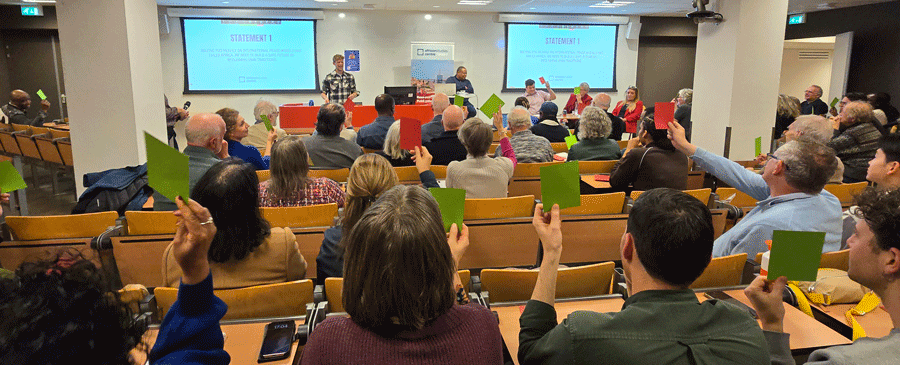
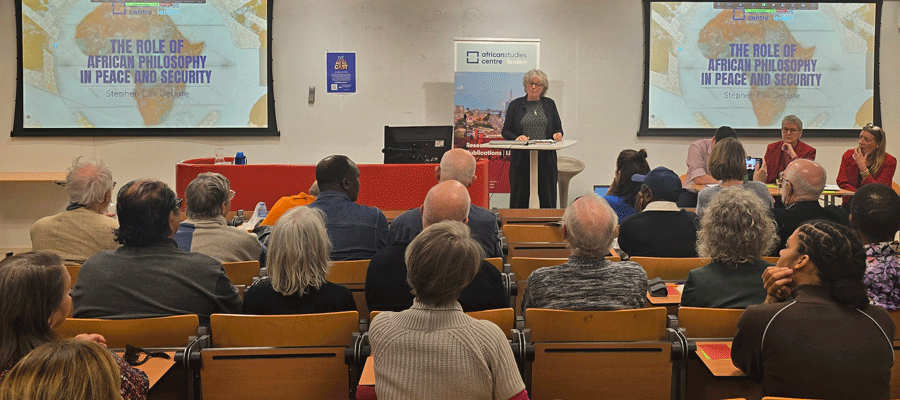
On 4 December a lively Stephen Ellis Debate took place – the first time the ASCL’s annual event was held in the form of a debate. The Stephen Ellis Debate closed the ASCL's African Philosophy Month. Pascah Mungwini, Professor of Philosophy in the Department of Philosophy, Practical and Systematic Theology at the University of South Africa (UNISA) gave a keynote in the spirit of the late Stephen Ellis’ ‘genuine effort to really understand Africa’.
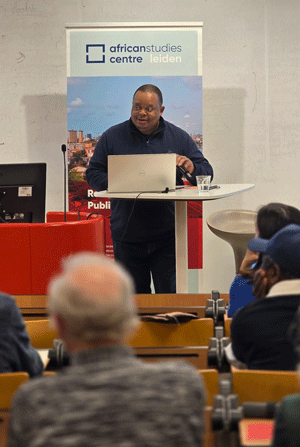 ‘Doing African philosophy’, Prof. Mungwini said, ‘is an ongoing quest, a text without an end. Sources are provided by different cultures, and real lived experiences must feed African philosophy.’ Considering what we are witnessing around the world today, this topic for the debate could not have come at a better time, he noted.
Render ideas in the minds of different generations
‘It is almost impossible to reflect on the problems in Africa (including violent conflicts) without at the same time developing the suspicion that we may not yet have found the system of organizing our lives, a mode of social and political governance that is most suited to our own history and cultural circumstances’, Prof. Mungwini elaborated. In Africa’s wisdom traditions lie important reference points such as proverbs, art forms, folklore, songs, rituals, and religious practices that can be invoked in processes of conflict mediation and resolution. ‘The role of philosophy is to render these ideas perpetually present in the minds of different generations as part of a philosophical heritage that they can engage with and call upon when the need arises. (…) There are ancestors who have bequeathed to us a legacy that we can and should tap into because it is a moral legacy - a system of ideas on how to live life.’
Neocolonial resource extraction and green grabbing
Some of the violent conflicts in Africa stem from ontological connections to territory, as different communities fight to assert and defend their forms of existence in the face of government-initiated programmes and other forms of neocolonial resource extraction and green grabbing in the context of climate change. The point Prof. Mungwini wanted to make is that philosophical knowledge of traditions and of ontological connections to territory and place should allow us to anticipate some of these conflicts and therefore avert them before they break out.
Read the full text of the keynote.
 Expert contributions
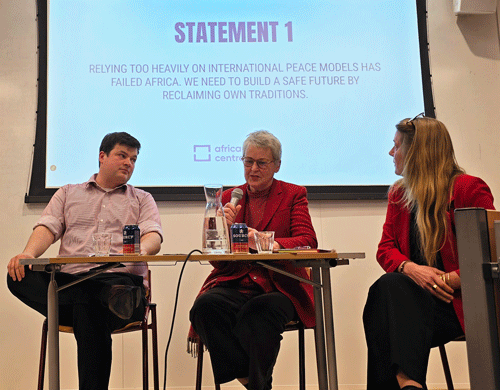
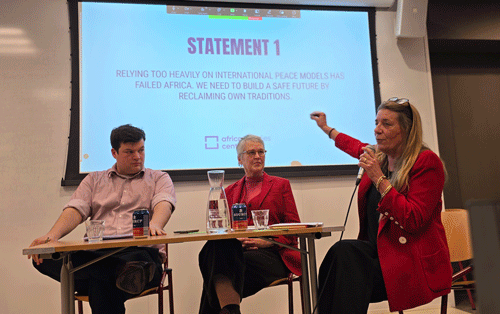
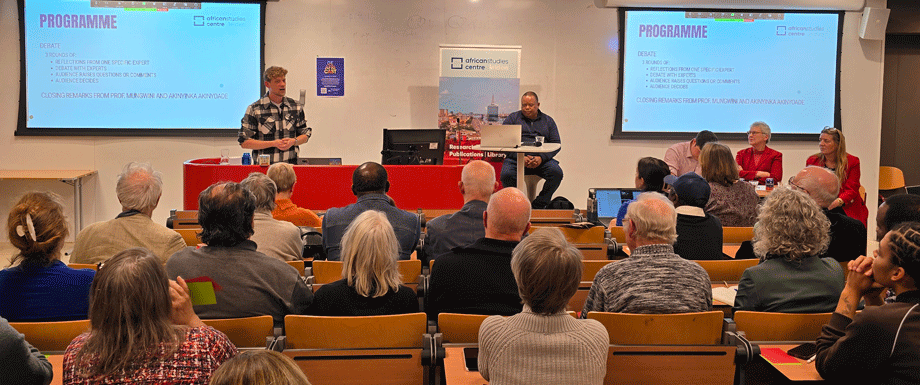
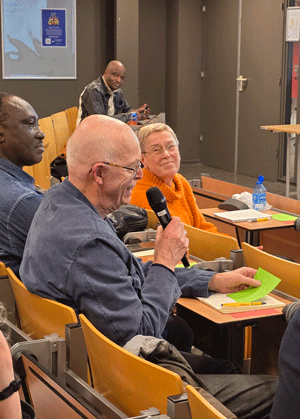
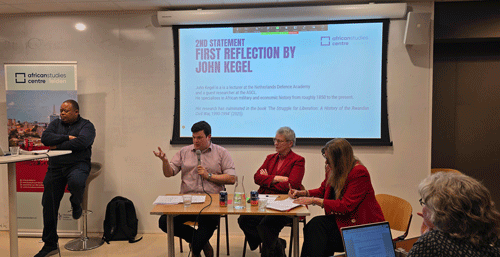
Three statements were consequently debated by experts John Kegel (lecturer at the Netherlands Defence Academy and guest researcher at the ASCL), Angela Roothaan (associate professor at VU Amsterdam, whose research focuses on Intercultural and African philosophy), and Irma Specht (managing director at Transition International, experienced in transition processes from conflict to peace) – with the audience participating by showing a green (agreeing) or red card (disagreeing with the statement). The discussion was led by dedicated moderator Jos Hummelen (presenter Podcast De Africast), who also brought lightness to the topic.
The statements were:
1. Relying too heavily on international peace models has failed Africa. We need to build a safe future by reclaiming own traditions (most of the audience agreed)
2. Conflicts on the African continent have become more complex, which makes conventional resolution mechanisms obsolete (vote in balance)
3. Peacebuilding that does not include African spiritual, communal and oral traditions is ineffective (most agreed).
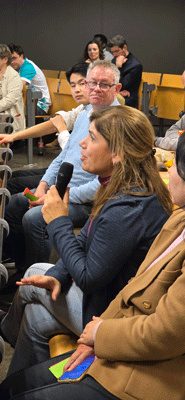 Some other elements that were discussed during the event:
- The tradition of dialogue must assist in conflict resolution.
- No overarching peace model works unless it is context-driven. African notions must make it into international peace models.
- Take much more into account that mobilisation for conflict is happening not only offline but increasingly online.
About the Stephen Ellis Annual Event
Every year, a committee consisting of the director of the African Studies Centre Leiden, the Chair of the ASCL Researchers Assembly, and Prof. Gerrie ter Haar (Stephen Ellis’ widow) invites a speaker to give the Stephen Ellis Annual Lecture. A big thank you to the participants of this year's event: Pascah Mungwini, John Kegel, Angela Roothaan, Irma Specht, and moderator Jos Hummelen, as well as the audience, both in the lecture hall and online.
Below you can watch a video registration of the event.
See more pictures below (click to enlarge)!
Posted on 8 December 2025, last modified on 23 March 2026